Tech Topic: Network Security
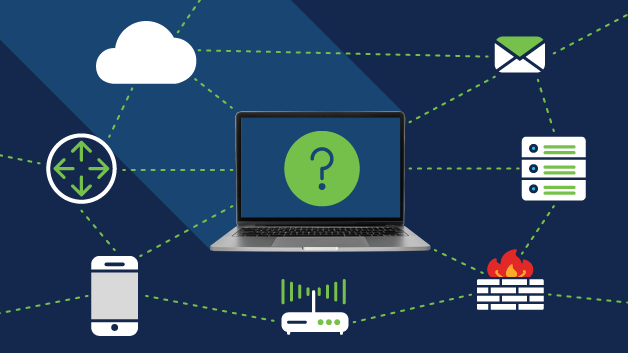
Network security is more important now than ever. Over the last ten years the use of the internet has increased drastically with nearly all our devices connected in some form to a network. The internet is no longer just for our computers. In addition to your typical laptop or desktop computer, we now connect tablets, smartphones, gaming consoles, and more recently with home automation and the internet of things (IoT), our home appliances. In order to safeguard all these devices, network security uses a combination of software, hardware, network architecture, and management techniques to secure networks.
Ever since the beginning of network computing there have been people who try to hack into networks to steal data, cause disruption, or profit financially from their exploits. To combat this threat, multiple types of software and hardware solutions have been developed. Antivirus and Antimalware software scans files looking for files containing known signatures that indicate the file is infected with malicious software. Virus and Malware signatures are the unique sequences of code found in virus’s programming (Computer Hope, 2017). If a signature is detected, the software can quarantine and remove the malicious software before it infects the computer. Email security gateways and software help to prevent on of the most common type of attack, phishing. The software works off a rule set to determine what traffic is allowed or denied (Cisco, 2020). Rules can filter out, or quarantine, incoming email traffic based on several factors, such as keywords to detect spam/phishing subjects, attachment file types, specific email addresses, or entire domains. Rules can also be set to prevent emails being set out of the network based on similar rules to prevent data loss or communicating with would be attackers
Similar to email security, firewalls work to control network traffic. They also work on rule sets that allow or deny traffic based on certain criteria. The management of these rules is extremely important to control the traffic that is allowed into and out of the network. Rules can be configured to filter out unwanted traffic such as blocking specific IP addresses, entire domains, URL’s, traffic port numbers, and content type (gambling, games, pornography, streaming video, etc.) Firewalls can be software based, usually on individual machines, or a combination of hardware and software tools are used to secure networks (Cisco, 2020). In larger networks, a firewall is typically a physical device that sits at the front of the network between the outside internet and the rest of the devices on the network. Configuring a physical firewall at the front of the network’s architecture allows for the traffic to be filtered in one central location before traveling to the rest of your network instead of relying on each individual machine to filter internet traffic on their own. This increases the network’s security by preventing unwanted traffic before it ever makes it to an end device and eliminates the possibility of the individual devices missing important updates or being configured incorrectly.
References
Cisco. (2020). What is Network Security. Cisco
Computer Hope. (2017, April 26). Virus Signature. Computer Hope.

Comments
Post a Comment