Network Security: Ping Attacks, Phishing and Social Engineering
Network
security is essential now more than ever. The cost related to cybersecurity continues
to grow annually which poses a risk to both businesses and individuals. Some of
the ways networks are exploited are through directly hacking systems and
leveraging vulnerabilities in computer users. While using direct hacking
techniques such as using ping attacks to create a denial of service (DoS) have
become less common, attackers have become more sophisticated and successful in
exploiting human users with social engineering and phishing campaigns.
A
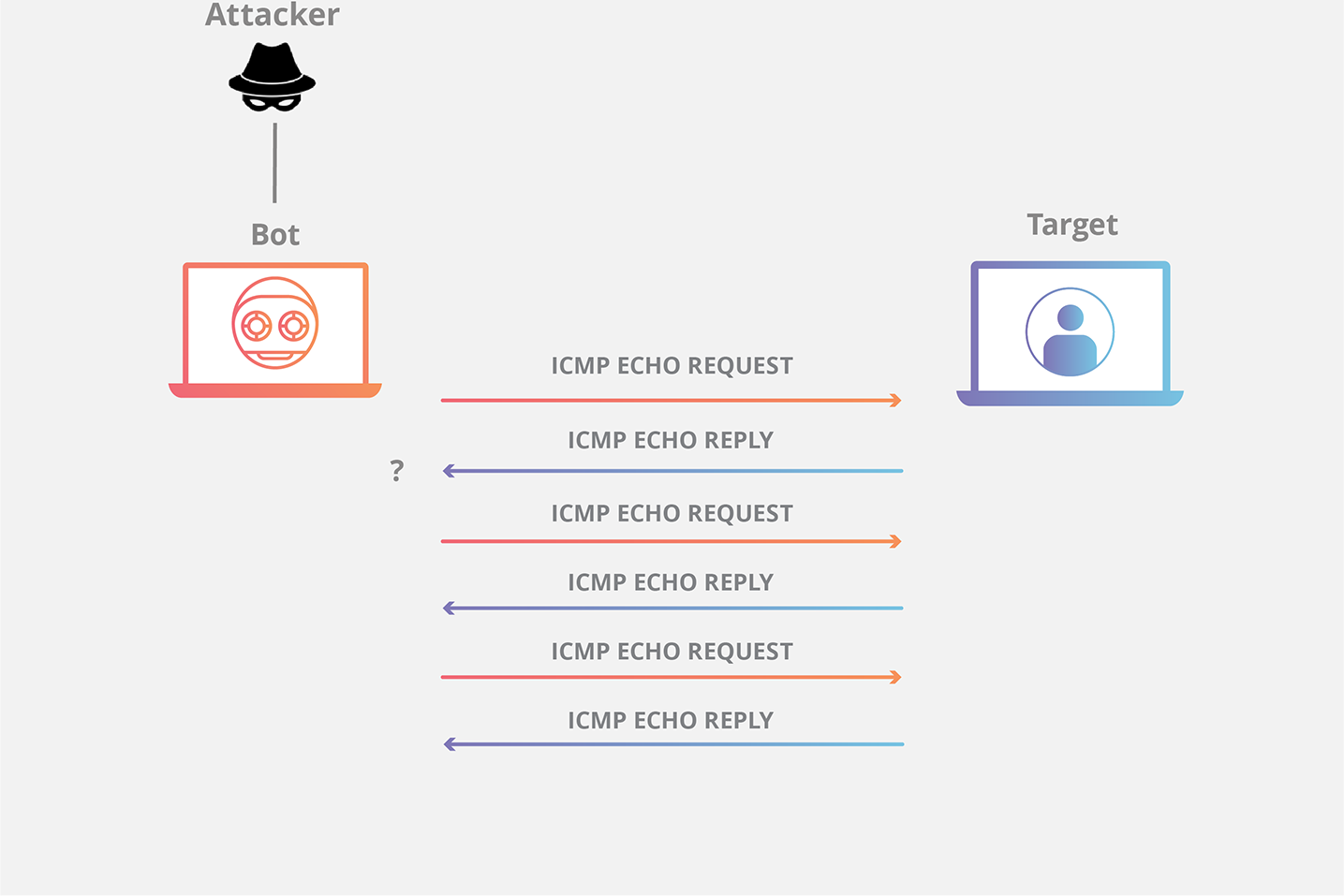
ping flood is one DoS attack using the ping command that seeks to compromise a
system by flooding it with numerous requests until it can no perform any
function other than trying to respond to the persistent requests. This is
typically done with the use of multiple systems, or botnets, to coordinate a
distributed denial-of-service (DDoS) attack (Cloudflare, 2020). The
effectiveness of the attack is directly tied to the number of requests that can
be directed at the targeted system. This can render a system completely useless
or make a system vulnerable by taking down important infrastructure within the
targeted system. For example, if an attacker were able to successfully target
and DDoS a network’s firewall, it may allow traffic to still pass through while
disregarding all the protection rules put in place to protect the network.
Attackers would then potentially have unlimited access to exploit the rest of
the network. These attacks can be mitigated through system administrative tools
to restrict the ability of systems to accept and respond to ICMP traffic
initiated through ping commands. Additionally, intrusion detection systems
(IDS) should be implemented to detect when these types of attacks that alerts
networks administrators of the questionable traffic to implement controls.
These types of attacks have become less prevalent in recent years due to the
development of advancement in protection systems leaving attackers to focus on
vulnerable computer users as their target to gain access to systems.

With
more focus on end users, attackers use multiple forms of social engineering to
attempt to gain system access. According to Norton (2020), “social engineering
is the act of tricking someone into divulging information or taking action,
usually through technology” (para. 1). This trickery takes place in many forms,
face-to-face, over the phone, or over email, and if successful poses a security
risk to networks by giving away valuable information that attackers can use to
infiltrate systems, such as valid login credential information. This can pose a
significant risk as attackers who steal login credentials can now access
systems as “valid” users. Attackers will play on user’s vulnerabilities by
posing as legitimate people, such as security technicians, or people they know
to gain trust to get them to reveal sensitive information that can then be used
to access systems and steal additional information. Social engineering is
something that must be recognized by users and requires training, which
requires them to be skeptical and vet the source of the information.
Additionally, software can help to mitigate threats from electronic sources
such as phishing emails.

Phishing
emails are the most prominent source of social engineering attacks and the
culprit behind most cybersecurity breaches. Of reported cybersecurity incidents
report, 80 percent were a result of phishing emails, representing $17,700 lost
every minute globally over the last year (Fruhlinger, 2020). Phishing emails,
which is also a form of social engineering, attempts to convince users the
email is legitimate to get them to divulge information, open malicious
attachments, or click on malicious links. This leaves networks vulnerable to
attack as users give up sensitive login credentials to business systems, open
attachments than installs malware, or click on links that plan to do the same
damage. Both user awareness training and mitigation software is needed to
combat this threat. Email security software can help to prevent emails coming
into the network based on keywords, sending address or IP, and file type, but
the user training is also required (Whitney, 2019). Technology will not block
all inbound malicious emails, so users must be able to recognize a potential
security risk when they receive them to avoid becoming a victim put themselves
or their company at risk.
References
Cloudflare.
(2020) Ping (ICMP) flood DDoS attack. Cloudflare.
https://www.cloudflare.com/learning/ddos/ping-icmp-flood-ddos-attack/
Fruhlinger,
J. (2020, March 9). Top cybersecurity facts, figures and statistics for 2020.
CSO Online.
https://www.csoonline.com/article/3153707/top-cybersecurity-facts-figures-and-statistics.html
Norton.
(2020). What is social engineering? Tips to help avoid becoming a victim.
Norton. https://us.norton.com/internetsecurity-emerging-threats-what-is-social-engineering.html
Whitney,
L. (2019, March 2). Most common cyberattacks we'll see in 2020, and how to
defend against them. ZDNet.
https://www.zdnet.com/article/most-common-cyberattacks-well-see-in-2020-and-how-to-defend-against-them/


Comments
Post a Comment